
The Phantom Time Hypothesis
There are dark corners of the internet where I’ve found mentions of “The Phantom Time Hypothesis”. This suggests that the years between 614 AD and 911 AD didn’t exist. But how can that be? How can human history have misplaced 300 years of history?
The hypothesis
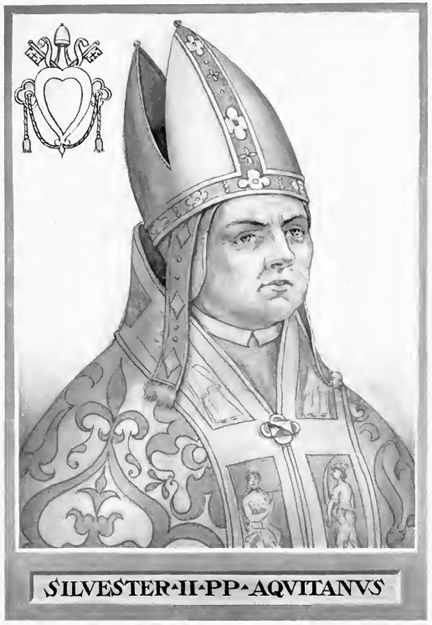
This is the brainchild of German amateur historian Heribert Illig. In 1996 he published Das erfundene Mittelalter: Die grösste Zeitfälschung der Geschichte, which translates to The Invented Middle Ages: The Greatest Time-Falsification in History. In his book, he claimed that by his calculations there are 297 missing years in human history1. He concluded this was a plot by Pope Sylvester II and Holy Roman Emperor Otto III2. The two wanted their reign to coincide with the year 1000, exactly a millennium after the birth of Christ3.

Illig concluded these two were not happy tinkering with a calendar to have a round number. According to him the two employed scribes to create and copy medieval manuscripts which would give the impression that more had happened in the past than had actually happened4. These fabrications included people like Emperor Charlemagne and English King Alfred the Great5.
Illig wasn’t the only person making such a bold claim.
A Russocentric variant
Anotely Fomenko was a mathematics professor at Moscow State University6. He suggested that our understanding of the standard timeline of history is wrong. In his opinion, pharaonic Egypt, dynastic China, classical Greece and Imperial Rome all took place in the Middle Ages7. Civilisation, he posited, didn’t get going till about 800 AD8.
In Fomenko’s colourful calendar9:
- Someone wrote the biblical New Testament before the Old Testament.
- The Crusades and the Trojan War are the same thing.
- Genghis Khan is the same person as Attila the Hun.

Evidence for the hypothesis
Emperor Charlemagne was a great believer in education and history. He employed many scribes of his own to copy and re-copy ancient texts. It is because of him that key texts from classical times still exist.
Or so conventional history claims.
Conspiracy theorists like Fomenko and Illig claim scribes invented whatever they wrote. While they were at it, the stories of Charlemagne’s life are also fake.
Since the texts we have are copies – not originals – how do you tell if the copy is authentic and accurate?
How can you fake a calendar?
Before we consider how to authenticate copies, we need to see if this is even possible.
And it’s true to say this sort of thing has actually happened.

The current western calendar is known as the Gregorian calendar because it was defined by Pope Gregory XIII10. Before 1582, they didn’t have leap years which means the calendar wasn’t as accurate as it could be. It also means that over a period of a few hundred years, the dates no longer made sense. The vernal equinox, for example, had shifted from March 21st to March 11th!11 The Gregorian calendar fixes this by adding an extra day every four years. This little trick allows our calendar to stop shifting, but they needed to fix the problem they had. They decided to agree to jump forward by 10 days so the day after 4th October 1582 was 15th October 158212.
Those ten days – 5.10.1582 – 14.10.1582 – didn’t exist.
So there have been instances where time was “lost”, so to speak.
We also should keep in mind that the European calendar was modified a few other times in the past. Many monks have done mental arithmetic to find “the right” date for Roman Catholic religious festivals or celebrations13. One key example – Roman Catholics celebrate the Annunciation of Christ (when Mary gets pregnant with Jesus) on 25 March, and then celebrates Jesus’ birth at Christmas on 25 December. That’s a neat and precise 9 months which is rare in human biology. Saturnalia was a pre-Catholic end-of-year festival. The Roman Catholic Church co-opted it its own use. It then worked things out so that the Annunciation takes place on 25 March.
It is important to remember victors write history. We should question and examine evidence for signs of obvious bias. We also should avoid claiming that something must be true – or false – because of our own biases.
It’s clear that calendar tampering happened. But could this sort of calendar-fixing drop almost 300 years of history?
Rebuttal
The first obvious clue is the limited approach these conspiracy theorists take. Illig and Fomenko have a Eurocentric and Russocentric view of history which is a key flaw14. If their ideas were correct then they would apply to the whole world, not one geographical region15. Documentation from Asia and records from the other continents show these years existed16.
This point only refutes the claim that the years never existed. It does not refute the claim that the Middle Ages were fiction and a hoax. After all, it is possible that the years 614 to 911 existed while the events we think took place are fiction.
This is where science and nature helps us17:

- Tree rings are a physical manifestation of what happened during the tree’s life. By cross referencing events in medieval documents we can identify when they happened.
- Solar eclipses can date an event with high accuracy.
- Historical texts describe other astronomical events, like meteorite showers or exploding supernovas. While the writer may not have known what the event was, we can place that event in time by working out when it happened.
My article on the Abbey at Vendôme is a case in point; we can map a meteor hitting the earth with the legend of its founding.
Why do these conspiracy theories exist?
It’s easy to see where these crackpot ideas come from.
- Illig’s idea refuses to accept a period of time where European society died off while other societies flourished.
- Fomenko’s proposal suggests the history of civilisation started with the founding of Kievan Rus, the forefather of modern Russia
This is the problem with having an idea first, and then looking for evidence to fit the idea rather than the other way round.
Conclusion
Conspiracy theories exist because of emotions, not facts. In this case
References
- Big Think. (2023). ‘Phantom time hypothesis’: Did a power-hungry pope fabricate centuries of history? [online] Available at: https://bigthink.com/the-past/phantom-time-hypothesis/[↩]
- Big Think. (2023). ‘Phantom time hypothesis’: Did a power-hungry pope fabricate centuries of history? [online] Available at: https://bigthink.com/the-past/phantom-time-hypothesis/[↩]
- Big Think. (2023). ‘Phantom time hypothesis’: Did a power-hungry pope fabricate centuries of history? [online] Available at: https://bigthink.com/the-past/phantom-time-hypothesis/[↩]
- Big Think. (2023). ‘Phantom time hypothesis’: Did a power-hungry pope fabricate centuries of history? [online] Available at: https://bigthink.com/the-past/phantom-time-hypothesis/[↩]
- Big Think. (2023). ‘Phantom time hypothesis’: Did a power-hungry pope fabricate centuries of history? [online] Available at: https://bigthink.com/the-past/phantom-time-hypothesis/[↩]
- Big Think. (2023). ‘Phantom time hypothesis’: Did a power-hungry pope fabricate centuries of history? [online] Available at: https://bigthink.com/the-past/phantom-time-hypothesis/[↩]
- Big Think. (2023). ‘Phantom time hypothesis’: Did a power-hungry pope fabricate centuries of history? [online] Available at: https://bigthink.com/the-past/phantom-time-hypothesis/[↩]
- Big Think. (2023). ‘Phantom time hypothesis’: Did a power-hungry pope fabricate centuries of history? [online] Available at: https://bigthink.com/the-past/phantom-time-hypothesis/[↩]
- Big Think. (2023). ‘Phantom time hypothesis’: Did a power-hungry pope fabricate centuries of history? [online] Available at: https://bigthink.com/the-past/phantom-time-hypothesis/[↩]
- The Editors of Encyclopaedia Britannica. “Ten Days That Vanished: The Switch to the Gregorian Calendar”. Encyclopedia Britannica, 13 Jun. 2025, https://www.britannica.com/story/ten-days-that-vanished-the-switch-to-the-gregorian-calendar. Accessed 29 October 2025.[↩]
- The Editors of Encyclopaedia Britannica. “Ten Days That Vanished: The Switch to the Gregorian Calendar”. Encyclopedia Britannica, 13 Jun. 2025, https://www.britannica.com/story/ten-days-that-vanished-the-switch-to-the-gregorian-calendar. Accessed 29 October 2025.[↩]
- The Editors of Encyclopaedia Britannica. “Ten Days That Vanished: The Switch to the Gregorian Calendar”. Encyclopedia Britannica, 13 Jun. 2025, https://www.britannica.com/story/ten-days-that-vanished-the-switch-to-the-gregorian-calendar. Accessed 29 October 2025.[↩]
- Big Think. (2023). ‘Phantom time hypothesis’: Did a power-hungry pope fabricate centuries of history? [online] Available at: https://bigthink.com/the-past/phantom-time-hypothesis/[↩]
- Big Think. (2023). ‘Phantom time hypothesis’: Did a power-hungry pope fabricate centuries of history? [online] Available at: https://bigthink.com/the-past/phantom-time-hypothesis/[↩]
- Big Think. (2023). ‘Phantom time hypothesis’: Did a power-hungry pope fabricate centuries of history? [online] Available at: https://bigthink.com/the-past/phantom-time-hypothesis/[↩]
- Big Think. (2023). ‘Phantom time hypothesis’: Did a power-hungry pope fabricate centuries of history? [online] Available at: https://bigthink.com/the-past/phantom-time-hypothesis/[↩]
- Big Think. (2023). ‘Phantom time hypothesis’: Did a power-hungry pope fabricate centuries of history? [online] Available at: https://bigthink.com/the-past/phantom-time-hypothesis/[↩]
Would you like to receive more of this kind of content by email? Fill in your details and we'll keep you up to date!