
Why Prague’s Hidden White Peacock Holds the Secret to Transformation
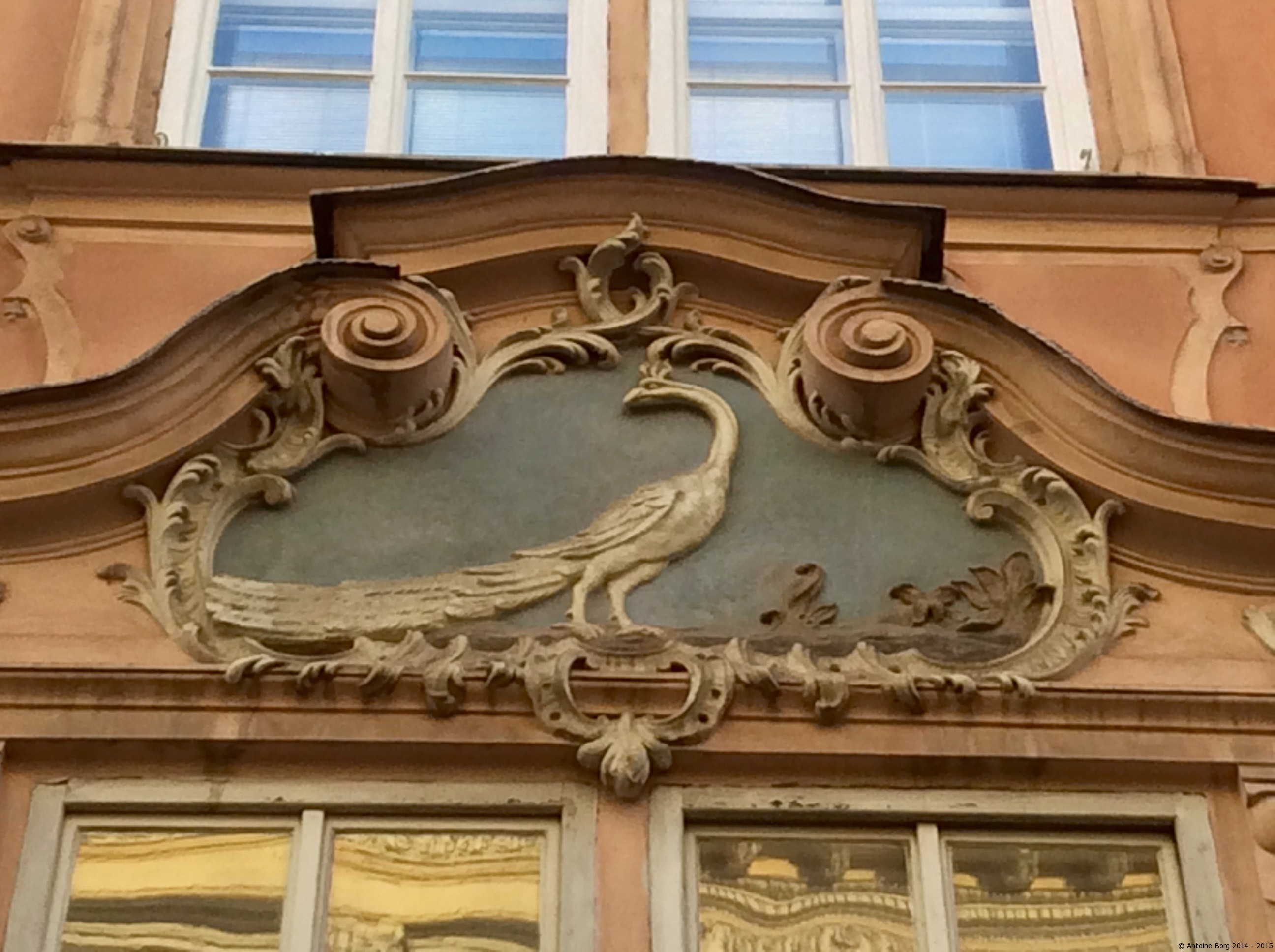
Walk down Celetna street in Prague’s Old Town and you might miss it. Most tourists rush past, eyes fixed on the famous Astronomical Clock. But if you stop at number 10 and look up, you’ll see something that’s been watching travellers for centuries: a white peacock, frozen in stone, its tail spread wide in a fan of intricate detail.
This isn’t pretty decoration. It’s a coded message left by alchemists—a sign that you’re walking the path to enlightenment.
The Artwork That Time Forgot
The House at the White Peacock stands on one of Prague’s oldest streets, its stunning rococo exterior1 dating from the late 18th century2. What catches the eye is the large white peacock carved in relief against a pale blue backdrop.

The peacock itself is rather worse for wear these days. The building needs a facelift, and the relief shows its age. Yet the image remains large and clearly visible—a testament to the craft that created it more than two centuries ago.
The house started life as separate medieval buildings in the 14th century3. Over the centuries, the owners merged and rebuilt them many times. The rococo facade we see today emerged during major rebuilding work in the late 1700s.
There are no records about the sculptor who created this magnificent peacock. We also don’t know who commissioned the work or what their exact intentions were. We do know that by the time he created it, Prague was already steeped in alchemical tradition. Alchemical symbols like this peacock carry deep meaning for those who can read them.
The Peacock in Myth: A Bird of Many Eyes
Long before alchemists adopted the peacock, ancient cultures revered this magnificent bird. The peacock’s story begins in Greek mythology, where it became forever linked to Hera, queen of the gods.

The tale is both beautiful and tragic. Zeus, not known to resist temptation, fell in love with a priestess named Io4 5. To hide his affair from his wife Hera6 7, he transformed Io into a white heifer8 9 10. But Hera wasn’t fooled. She demanded the cow as a gift11 12 and set Argus Panoptes—a giant with a hundred eyes—to watch over her13 14 15 16.
Argus was the perfect guard. Even when he slept, some of his eyes remained open, always watching. Zeus sent Hermes17 18 to rescue Io. The messenger god played his flute19 20, lulling all hundred eyes to sleep, then killed the giant21 22 23.
The loss of her faithful servant devastated Hera. She took Argus’s hundred eyes24 25 and placed them26 27 on the tail feathers of her sacred bird, the peacock28 29 30. That’s why peacock feathers have those distinctive “eyes”31 32 —they’re said to be Argus’s eyes, watching forever.
This myth gave the peacock powerful symbolism. In Roman times, peacocks represented funerals, death, and resurrection33 34. The ancient Romans believed peacock flesh didn’t decay, thinking it immortal35 36. It didnt take long for early Christians to embrace this symbolism. They saw the peacock as a representation of eternal life and Christ’s resurrection37 38 39.
The peacock is also a symbol of renewal since it regrows its magnificent feathers every year40. As winter gives way to spring, the peacock’s plumage returns more vibrant than before.

The Alchemist’s Bird: Reading the Peacock’s Tail
For alchemists working in Rudolf II’s Prague, the peacock held special meaning. They called one crucial stage of their work “cauda pavonis”—the peacock’s tail41 42.
This stage is when the black, greasy contents of the alchemist’s flask suddenly burst into iridescent colours43 44, like a rainbow in an oil slick or the shimmering fan of a peacock’s tail. The appearance of these colours signalled that the work progresses as it should.
The peacock stage represents this45: chaos and diversity, but also potential46. The different colours appear at once—the breakdown necessary before unification can occur47. Alchemists knew that combining all the colours of the rainbow creates white light. This was the bridge between two critical stages of their work.
The symbolism runs deeper. Peacocks eat poisonous snakes, transforming poison into the beauty of their tail colours. This mirrored the alchemical process: converting base materials into something precious.
Prague: Where Alchemy Found Its Home
Up till the 17th48 century, Prague was the beating heart of European alchemy. Emperor Rudolf II, who ruled from 1576 to 1612, was obsessed with finding the Philosopher’s Stone49 50—the mysterious substance that could turn base metals into gold51 and grant eternal life52.

While alchemists faced persecution elsewhere in Europe, Rudolf welcomed them with open arms. He built large laboratories at Prague Castle53 where figures like John Dee, and Tycho Brahe could work54. Rudolf himself also spent time conducting experiments here55.
Tycho Brahe died in Prague too, and is buried not far from the White Peacock.
Under Rudolf’s protection56, Prague became a centre where scholars could explore new ideas safely, sheltered from accusations of heresy or black magic that haunted them elsewhere. This patronage led to Prague’s second golden age57, attracting artists, scientists, and thinkers from across Europe.
What the Peacock Tells Us Today

The location matters. Celetna street connects two powerful points: the Powder Tower (gateway to the Old Town) and Old Town Square (heart of Prague). This stretch of cobblestones has witnessed coronations, revolutions, and countless lives lived over eight centuries.
The stories behind the Powder Tower explain why it’s one of the few still standing today.
Stand beneath that fading white peacock today and you’re looking at a message thrown across time. The alchemists who read this symbol understood something modern psychology would later rediscover: transformation requires facing darkness before finding light.
The peacock stage represents a crucial moment: when chaos and colours swirl together, when all possibilities exist at once, when we’re no longer in darkness but haven’t yet reached clarity. It’s uncomfortable. It’s confusing. But it’s necessary.
The white peacock reminds us that purification isn’t instant. We pass through the rainbow before we reach the white light. We see all the colours, experience all the emotions, face all the aspects of ourselves—the beautiful and the poisonous, like the peacock eating snakes and transforming their venom into beauty.
Next time you’re in Prague, stroll along Celetna, and find the white peacock at number 10.
As at time of writing, the building looks shabby, but that white bird spread against blue stucco has been guiding seekers for centuries. Stand there. Look up. Think about your own journey from darkness to light, through all the colours in between.
Then continue west through Old Town Square, past the Astronomical Clock, over Charles Bridge with its statues watching from both sides, and up to Prague Castle where Rudolf’s alchemists once laboured over their flasks, watching for the colours of the peacock’s tail.
You’re walking a path of transformation. The symbols are there if you know how to read them.
References
- The Creative Adventurer (2024) Ultimate Walking Tour of Prague’s Old Town House Signs [online]. Available from: https://thecreativeadventurer.com/ultimate-walking-tour-of-pragues-old-town-house-signs/ (Accessed 23 November 2025).[↩]
- The Creative Adventurer (2024) Ultimate Walking Tour of Prague’s Old Town House Signs [online]. Available from: https://thecreativeadventurer.com/ultimate-walking-tour-of-pragues-old-town-house-signs/ (Accessed 23 November 2025).[↩]
- Anon (2021) House ‘At the White Peacock’ [online]. Available from: https://wikimapia.org/28618685/House-At-the-White-Peacock (Accessed 23 November 2025).[↩]
- Claus, P. (2025) Peacock in Greek Mythology was a Symbol of Royalty and Power – GreekReporter.com [online]. Available from: https://greekreporter.com/2025/01/25/peacock-ancient-greek-mythology/ (Accessed 23 November 2025).[↩]
- Samatas, Y. (2025) Τhe Peacock and Hera in Greek Mythology [online]. Available from: https://www.greekmyths-greekmythology.com/peacock-and-hera/ (Accessed 23 November 2025).[↩]
- Anon (2021) The Symbolism of Peacocks [online]. Available from: https://phxart.org/blog/the-symbolism-of-peacocks/ (Accessed 23 November 2025).[↩]
- Samatas, Y. (2025) Τhe Peacock and Hera in Greek Mythology [online]. Available from: https://www.greekmyths-greekmythology.com/peacock-and-hera/ (Accessed 23 November 2025).[↩]
- Claus, P. (2025) Peacock in Greek Mythology was a Symbol of Royalty and Power – GreekReporter.com [online]. Available from: https://greekreporter.com/2025/01/25/peacock-ancient-greek-mythology/ (Accessed 23 November 2025).[↩]
- Samatas, Y. (2025) Τhe Peacock and Hera in Greek Mythology [online]. Available from: https://www.greekmyths-greekmythology.com/peacock-and-hera/ (Accessed 23 November 2025).[↩]
- The Editors of Encyclopedia Britannica (2017) Argus. Encyclopædia Britannica [online]. Available from: https://www.britannica.com/topic/Argus-Greek-mythology (Accessed 29 November 2025).[↩]
- Claus, P. (2025) Peacock in Greek Mythology was a Symbol of Royalty and Power – GreekReporter.com [online]. Available from: https://greekreporter.com/2025/01/25/peacock-ancient-greek-mythology/ (Accessed 23 November 2025).[↩]
- Samatas, Y. (2025) Τhe Peacock and Hera in Greek Mythology [online]. Available from: https://www.greekmyths-greekmythology.com/peacock-and-hera/ (Accessed 23 November 2025).[↩]
- Anon (2021) The Symbolism of Peacocks [online]. Available from: https://phxart.org/blog/the-symbolism-of-peacocks/ (Accessed 23 November 2025).[↩]
- Claus, P. (2025) Peacock in Greek Mythology was a Symbol of Royalty and Power – GreekReporter.com [online]. Available from: https://greekreporter.com/2025/01/25/peacock-ancient-greek-mythology/ (Accessed 23 November 2025).[↩]
- Samatas, Y. (2025) Τhe Peacock and Hera in Greek Mythology [online]. Available from: https://www.greekmyths-greekmythology.com/peacock-and-hera/ (Accessed 23 November 2025).[↩]
- The Editors of Encyclopedia Britannica (2017) Argus. Encyclopædia Britannica [online]. Available from: https://www.britannica.com/topic/Argus-Greek-mythology (Accessed 29 November 2025).[↩]
- Claus, P. (2025) Peacock in Greek Mythology was a Symbol of Royalty and Power – GreekReporter.com [online]. Available from: https://greekreporter.com/2025/01/25/peacock-ancient-greek-mythology/ (Accessed 23 November 2025).[↩]
- Samatas, Y. (2025) Τhe Peacock and Hera in Greek Mythology [online]. Available from: https://www.greekmyths-greekmythology.com/peacock-and-hera/ (Accessed 23 November 2025).[↩]
- Claus, P. (2025) Peacock in Greek Mythology was a Symbol of Royalty and Power – GreekReporter.com [online]. Available from: https://greekreporter.com/2025/01/25/peacock-ancient-greek-mythology/ (Accessed 23 November 2025).[↩]
- Samatas, Y. (2025) Τhe Peacock and Hera in Greek Mythology [online]. Available from: https://www.greekmyths-greekmythology.com/peacock-and-hera/ (Accessed 23 November 2025).[↩]
- Claus, P. (2025) Peacock in Greek Mythology was a Symbol of Royalty and Power – GreekReporter.com [online]. Available from: https://greekreporter.com/2025/01/25/peacock-ancient-greek-mythology/ (Accessed 23 November 2025).[↩]
- Samatas, Y. (2025) Τhe Peacock and Hera in Greek Mythology [online]. Available from: https://www.greekmyths-greekmythology.com/peacock-and-hera/ (Accessed 23 November 2025).[↩]
- The Editors of Encyclopedia Britannica (2017) Argus. Encyclopædia Britannica [online]. Available from: https://www.britannica.com/topic/Argus-Greek-mythology (Accessed 29 November 2025).[↩]
- Anon (2021) The Symbolism of Peacocks [online]. Available from: https://phxart.org/blog/the-symbolism-of-peacocks/ (Accessed 23 November 2025).[↩]
- Samatas, Y. (2025) Τhe Peacock and Hera in Greek Mythology [online]. Available from: https://www.greekmyths-greekmythology.com/peacock-and-hera/ (Accessed 23 November 2025).[↩]
- Anon (2021) The Symbolism of Peacocks [online]. Available from: https://phxart.org/blog/the-symbolism-of-peacocks/ (Accessed 23 November 2025).[↩]
- Samatas, Y. (2025) Τhe Peacock and Hera in Greek Mythology [online]. Available from: https://www.greekmyths-greekmythology.com/peacock-and-hera/ (Accessed 23 November 2025).[↩]
- Anon (2021) The Symbolism of Peacocks [online]. Available from: https://phxart.org/blog/the-symbolism-of-peacocks/ (Accessed 23 November 2025).[↩]
- Claus, P. (2025) Peacock in Greek Mythology was a Symbol of Royalty and Power – GreekReporter.com [online]. Available from: https://greekreporter.com/2025/01/25/peacock-ancient-greek-mythology/ (Accessed 23 November 2025).[↩]
- The Editors of Encyclopedia Britannica (2017) Argus. Encyclopædia Britannica [online]. Available from: https://www.britannica.com/topic/Argus-Greek-mythology (Accessed 29 November 2025).[↩]
- The Creative Adventurer (2024) Ultimate Walking Tour of Prague’s Old Town House Signs [online]. Available from: https://thecreativeadventurer.com/ultimate-walking-tour-of-pragues-old-town-house-signs/ (Accessed 23 November 2025).[↩]
- Matthews, M. (2016) The Peacock in Myth, Legend, and 19th Century History [online]. Available from: https://www.mimimatthews.com/2016/05/13/the-peacock-in-myth-legend-and-19th-century-history/ (Accessed 29 November 2025).[↩]
- Samatas, Y. (2025) Τhe Peacock and Hera in Greek Mythology [online]. Available from: https://www.greekmyths-greekmythology.com/peacock-and-hera/ (Accessed 23 November 2025).[↩]
- Matthews, M. (2016) The Peacock in Myth, Legend, and 19th Century History [online]. Available from: https://www.mimimatthews.com/2016/05/13/the-peacock-in-myth-legend-and-19th-century-history/ (Accessed 29 November 2025).[↩]
- Claus, P. (2025) Peacock in Greek Mythology was a Symbol of Royalty and Power – GreekReporter.com [online]. Available from: https://greekreporter.com/2025/01/25/peacock-ancient-greek-mythology/ (Accessed 23 November 2025).[↩]
- Samatas, Y. (2025) Τhe Peacock and Hera in Greek Mythology [online]. Available from: https://www.greekmyths-greekmythology.com/peacock-and-hera/ (Accessed 23 November 2025).[↩]
- Claus, P. (2025) Peacock in Greek Mythology was a Symbol of Royalty and Power – GreekReporter.com [online]. Available from: https://greekreporter.com/2025/01/25/peacock-ancient-greek-mythology/ (Accessed 23 November 2025).[↩]
- Matthews, M. (2016) The Peacock in Myth, Legend, and 19th Century History [online]. Available from: https://www.mimimatthews.com/2016/05/13/the-peacock-in-myth-legend-and-19th-century-history/ (Accessed 29 November 2025).[↩]
- Mourning, A. of (2011) Symbolism, The Peacock – Art of Mourning [online]. Available from: https://artofmourning.com/symbolism-sunday-the-peacock/ (Accessed 29 November 2025).[↩]
- Samatas, Y. (2025) Τhe Peacock and Hera in Greek Mythology [online]. Available from: https://www.greekmyths-greekmythology.com/peacock-and-hera/ (Accessed 23 November 2025).[↩]
- Mourning, A. of (2011) Symbolism, The Peacock – Art of Mourning [online]. Available from: https://artofmourning.com/symbolism-sunday-the-peacock/ (Accessed 29 November 2025).[↩]
- Admin (2023) The Peacock’s Tail Stage and the Philosopher’s Stone [online]. Available from: https://www.ic7zi.com/esoteric/the-peacocks-tail-stage-and-the-philosophers-stone/ (Accessed 29 November 2025).[↩]
- Jörg Völlnagel (2016) Illuminating Alchemy’s Colorful Peacock Stage [online]. Available from: https://blogs.getty.edu/iris/illuminating-alchemys-colorful-peacock-stage/ (Accessed 29 November 2025).[↩]
- Admin (2023) The Peacock’s Tail Stage and the Philosopher’s Stone [online]. Available from: https://www.ic7zi.com/esoteric/the-peacocks-tail-stage-and-the-philosophers-stone/ (Accessed 29 November 2025).[↩]
- The Creative Adventurer (2024) Ultimate Walking Tour of Prague’s Old Town House Signs [online]. Available from: https://thecreativeadventurer.com/ultimate-walking-tour-of-pragues-old-town-house-signs/ (Accessed 23 November 2025).[↩]
- Admin (2023) The Peacock’s Tail Stage and the Philosopher’s Stone [online]. Available from: https://www.ic7zi.com/esoteric/the-peacocks-tail-stage-and-the-philosophers-stone/ (Accessed 29 November 2025).[↩]
- Admin (2023) The Peacock’s Tail Stage and the Philosopher’s Stone [online]. Available from: https://www.ic7zi.com/esoteric/the-peacocks-tail-stage-and-the-philosophers-stone/ (Accessed 29 November 2025).[↩]
- The Creative Adventurer (2024) Ultimate Walking Tour of Prague’s Old Town House Signs [online]. Available from: https://thecreativeadventurer.com/ultimate-walking-tour-of-pragues-old-town-house-signs/ (Accessed 23 November 2025).[↩]
- Anon (n.d.) Alchemists, Rudolph II and Prague – Prague Now [online]. Available from: https://prague-now.com/history/alchemists-rudolph-ii/ (Accessed 23 November 2025).[↩]
- Stenz, R. (2021) Emperor Rudolf II: Prague’s Patron of Arts and Science [online]. Available from: https://www.czechcenter.org/blog/2021/7/1/7q9enwx9t33fqnij3qqswfpo8p07a7 (Accessed 29 November 2025).[↩]
- Stenz, R. (2021) Emperor Rudolf II: Prague’s Patron of Arts and Science [online]. Available from: https://www.czechcenter.org/blog/2021/7/1/7q9enwx9t33fqnij3qqswfpo8p07a7 (Accessed 29 November 2025).[↩]
- Stenz, R. (2021) Emperor Rudolf II: Prague’s Patron of Arts and Science [online]. Available from: https://www.czechcenter.org/blog/2021/7/1/7q9enwx9t33fqnij3qqswfpo8p07a7 (Accessed 29 November 2025).[↩]
- Anon (n.d.) Alchemists, Rudolph II and Prague – Prague Now [online]. Available from: https://prague-now.com/history/alchemists-rudolph-ii/ (Accessed 23 November 2025).[↩]
- Stenz, R. (2021) Emperor Rudolf II: Prague’s Patron of Arts and Science [online]. Available from: https://www.czechcenter.org/blog/2021/7/1/7q9enwx9t33fqnij3qqswfpo8p07a7 (Accessed 29 November 2025).[↩]
- Anon (n.d.) Alchemists, Rudolph II and Prague – Prague Now [online]. Available from: https://prague-now.com/history/alchemists-rudolph-ii/ (Accessed 23 November 2025).[↩]
- Stenz, R. (2021) Emperor Rudolf II: Prague’s Patron of Arts and Science [online]. Available from: https://www.czechcenter.org/blog/2021/7/1/7q9enwx9t33fqnij3qqswfpo8p07a7 (Accessed 29 November 2025).[↩]
- Stenz, R. (2021) Emperor Rudolf II: Prague’s Patron of Arts and Science [online]. Available from: https://www.czechcenter.org/blog/2021/7/1/7q9enwx9t33fqnij3qqswfpo8p07a7 (Accessed 29 November 2025).[↩]
Would you like to receive more of this kind of content by email? Fill in your details and we'll keep you up to date!